


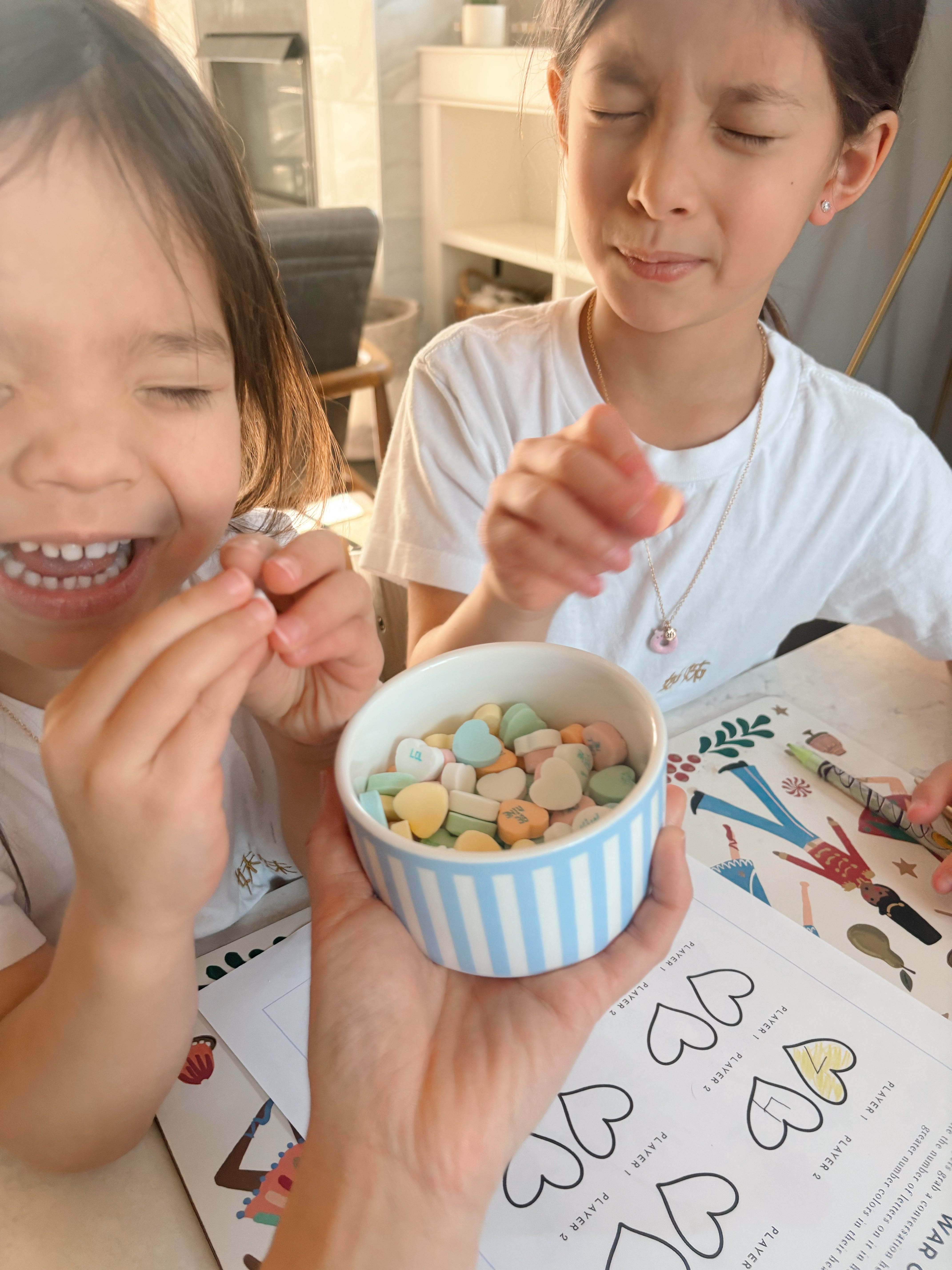
Besides being a sweet treat, conversation hearts are an affordable and fun resource for playful learning. As kids sort, count, roll, and match, they’re strengthening early math skills, fine motor coordination, and problem-solving. Here are some games we’ve played complete with the FULL downloadable printable at the bottom! All of these are easy to set up and adjustable for a range of ages making them perfect for at-home or classroom learning this Valentine’s Day season.
All you’ll need are conversation hearts, dice, and common household finds. Let’s get to it!

1. Tic-Tac-Toe
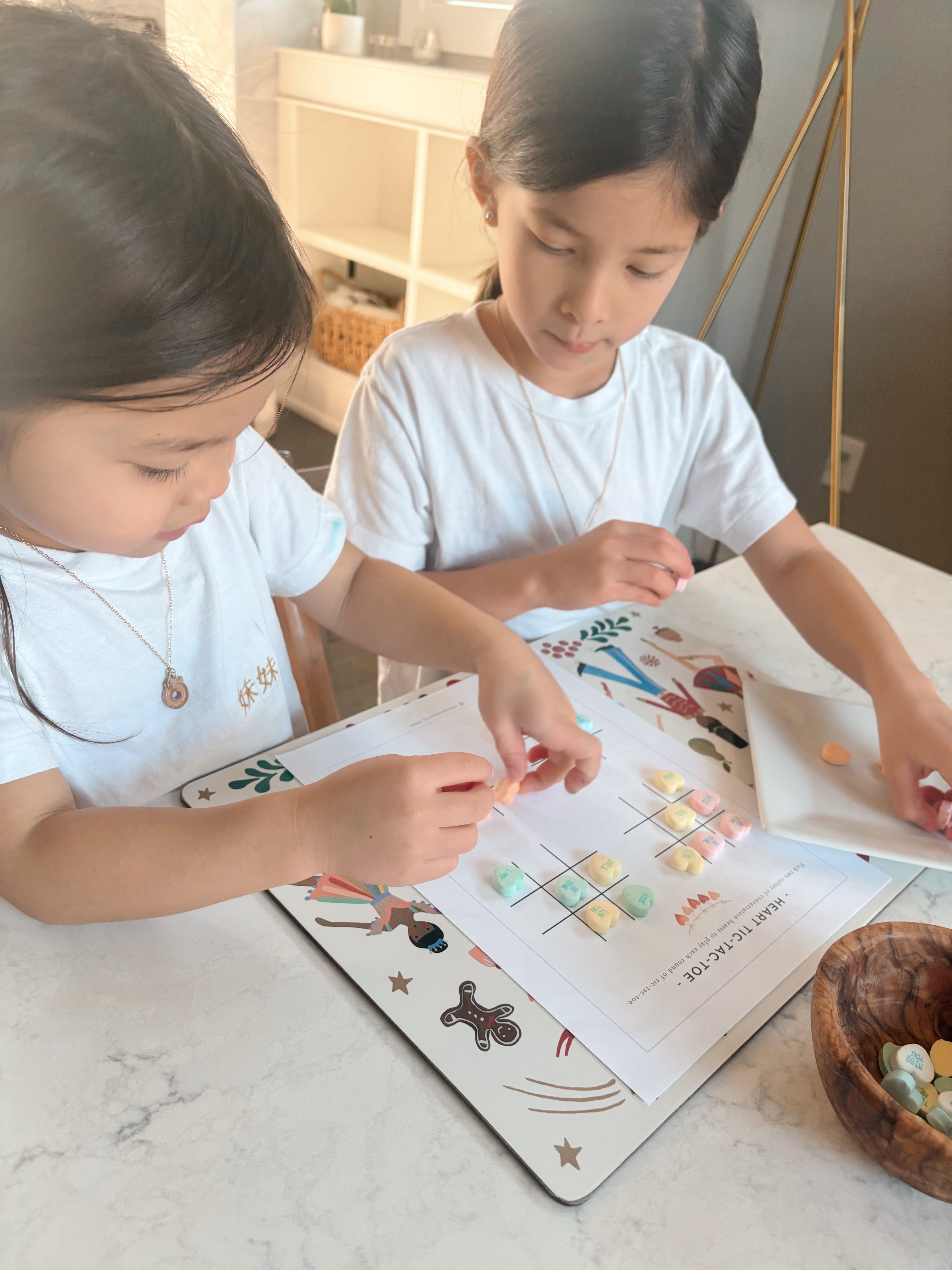
Here’s a twist on this classic game! Players take turns placing conversation hearts on the board, trying to get three in a row—across, down, or diagonally. Kids can build turn-taking skills while developing strategy and spatial awareness.
2. Line Tracing


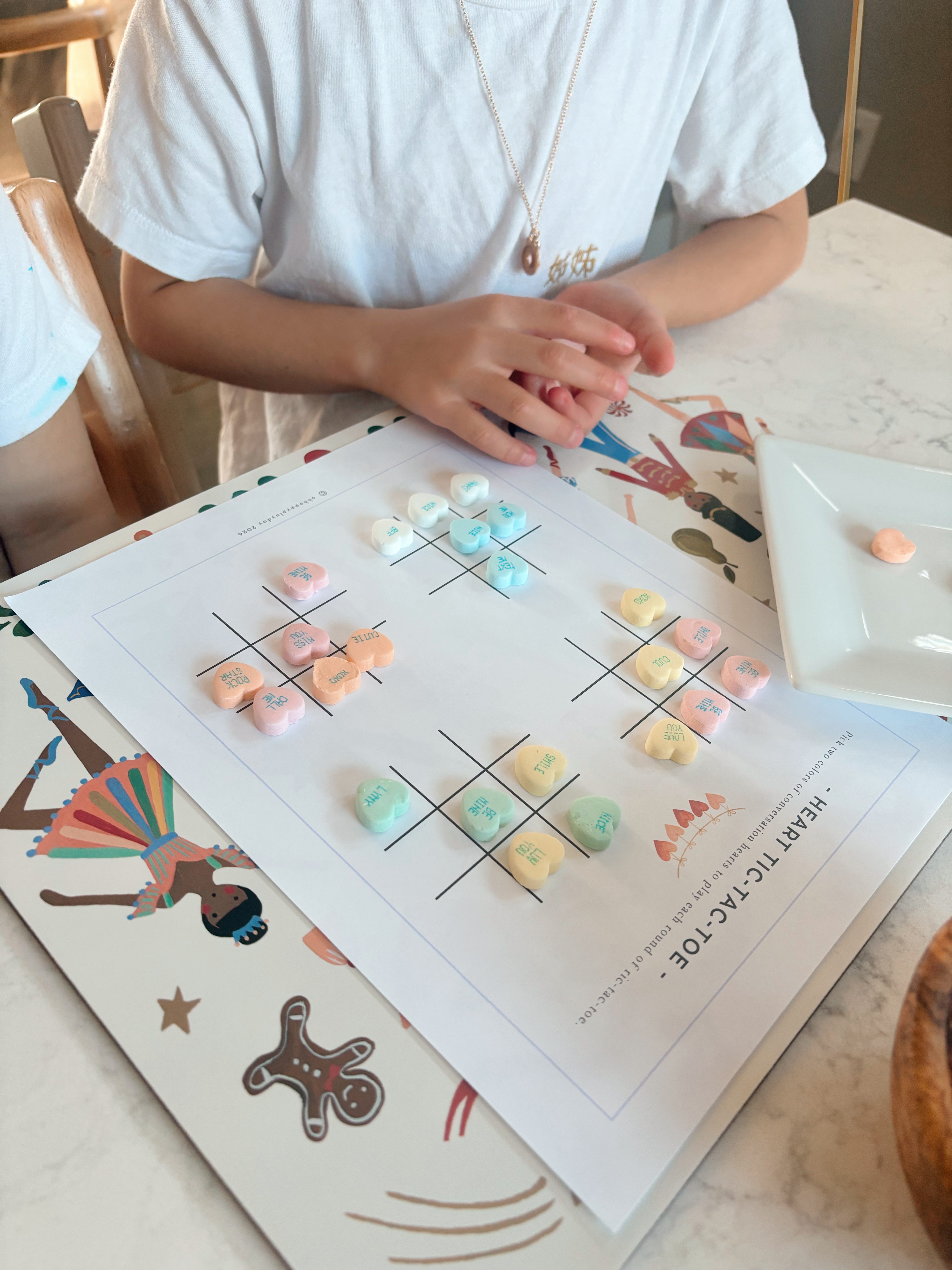
Draw a heart and fill it with simple patterned lines. Use conversation hearts to trace and decorate the lines, creating a colorful, textured heart design. I love this one for building fine motor skills, attention to detail, and pattern recognition—such a fun blend of art and learning!
3. Heart Patterns


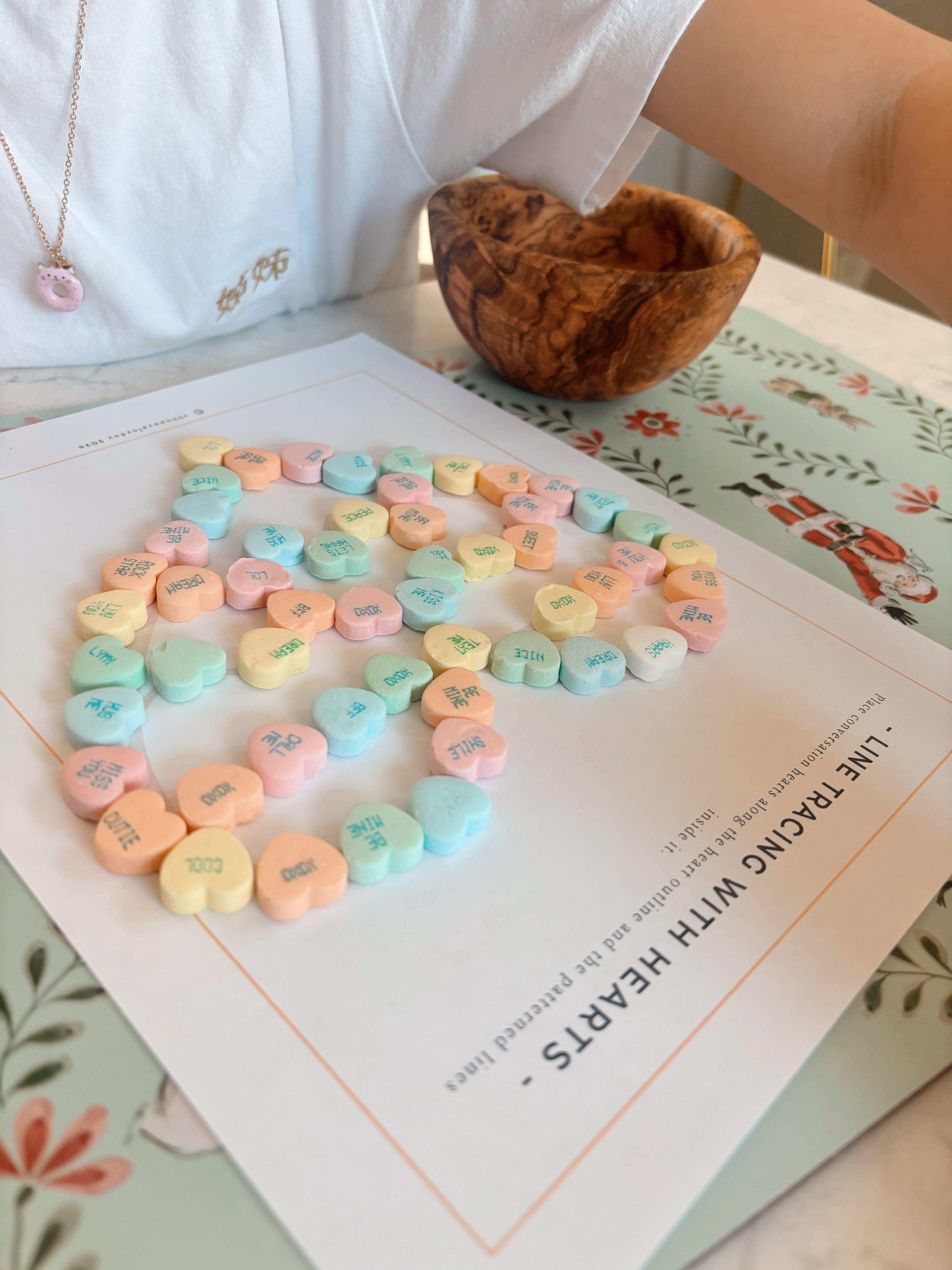
Invite kids to explore simple repeating patterns (e.g. ABAB, AAB, ABBA) using conversation hearts. They can copy a pattern you’ve started, extend the pattern, or design their own while building early math skills though hands-on play.
4. War of the Hearts


Each player picks one conversation heart at random. Count the number of letters printed on your heart then write that number down. Once both players have their totals, compare numbers. The player with the higher number wins the round.
5. Color Sorting
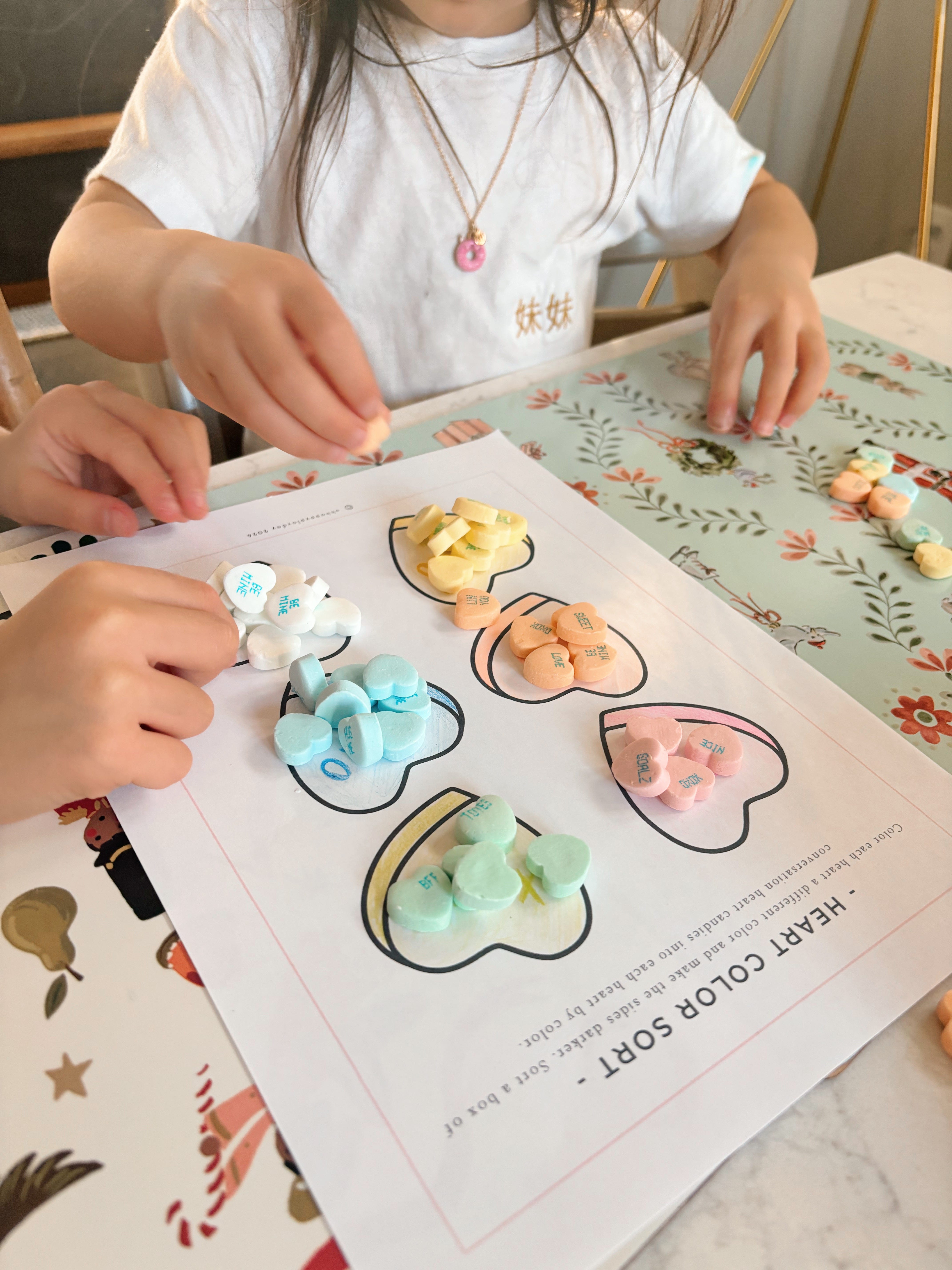
Sort conversation hearts by color. Once sorted, count the hearts in each group and compare to see which colors have more, fewer, or the same number.
6. Heart Graphing
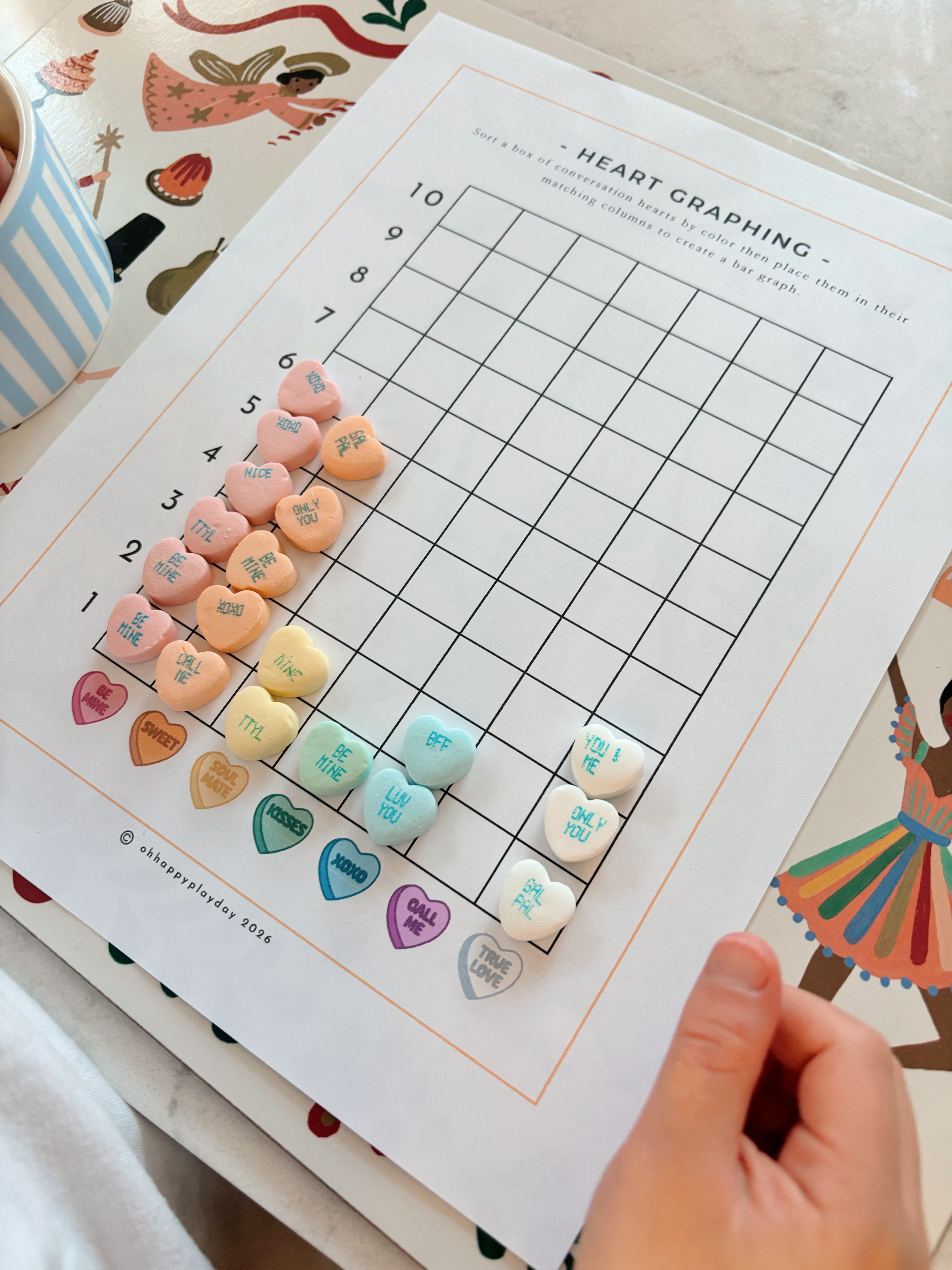
Have kids place conversation hearts into a graph logging how many of each color they have. As they fill in the columns, practice counting, comparing quantities, and interpreting data.
7. Heart Stacking


Stack conversation hearts to build the tallest tower without falling in one minute. If it topples, they can try again and experiment with new strategies.
Play extensions:
Count the hearts as you stack them.
Read the words on each heart as you stack them.
Use tweezers or chopsticks only to transfer the hearts.
8. Heart Probability
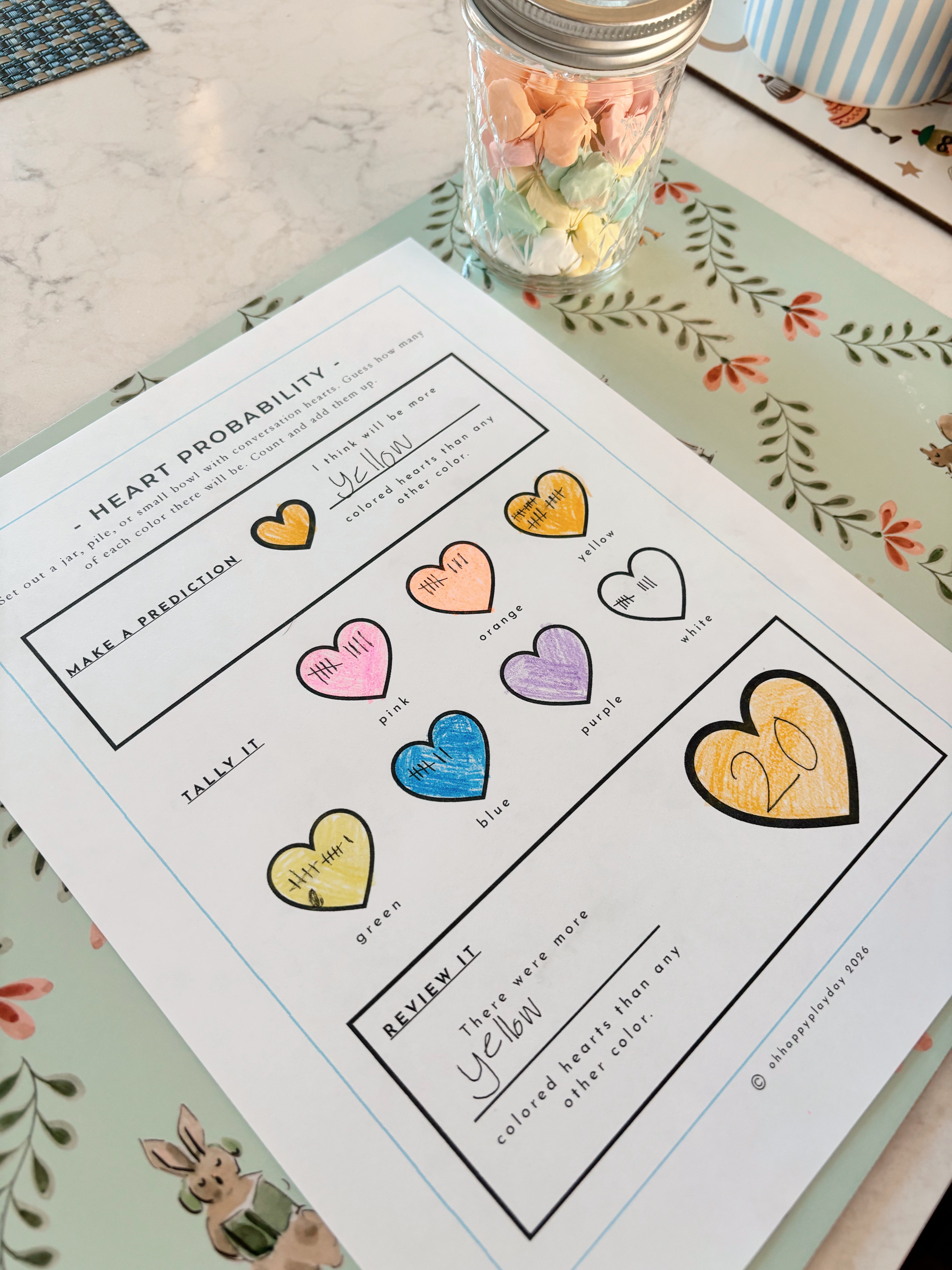
Place conversation hearts in a small jar or bowl and invite your child to predict which color they think will appear most often. After making their guess, count and tally each color, then review the results to see whether their prediction was correct.
9. Roll and Cover
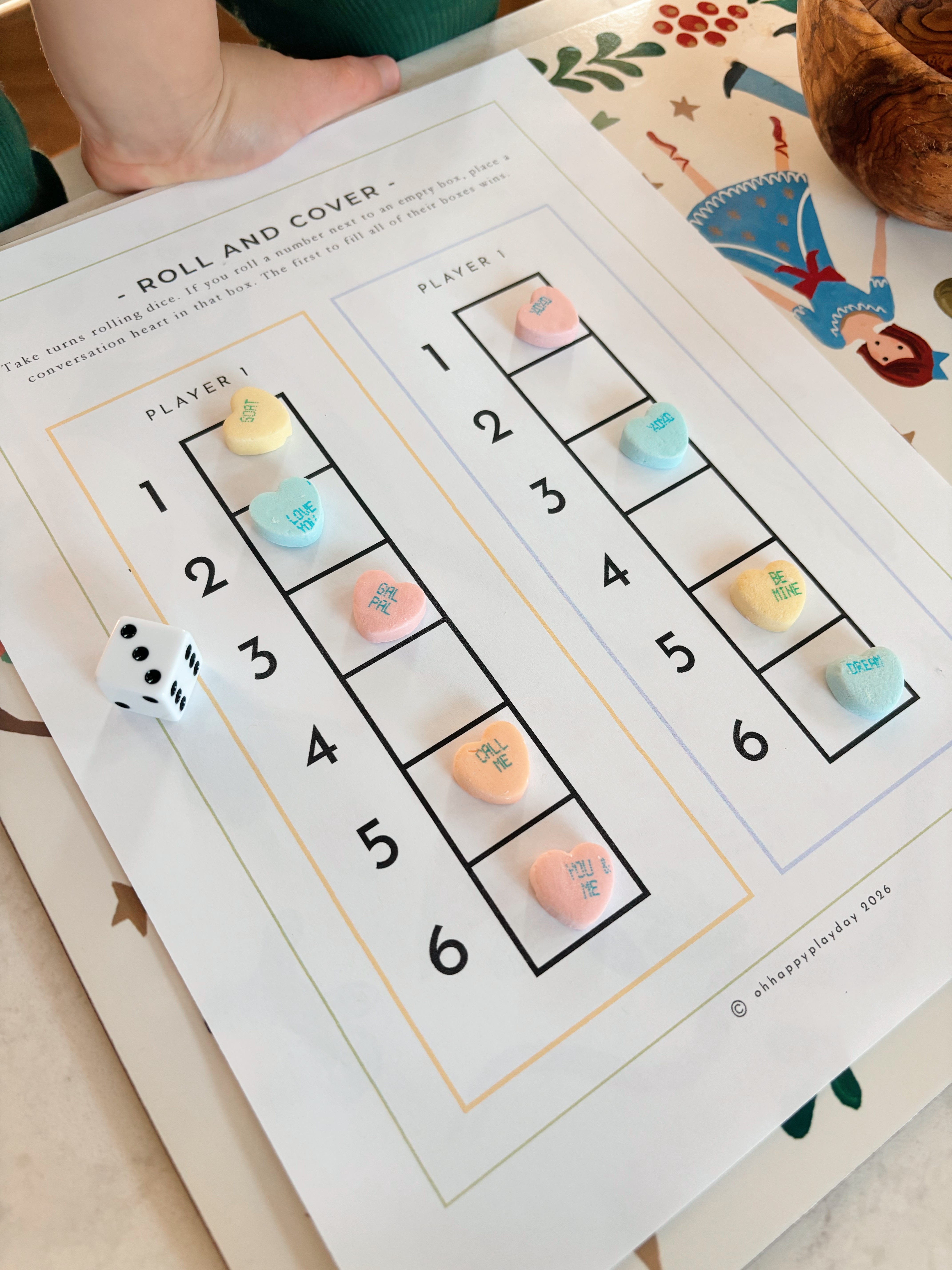
To play this game, each player takes turning rolling one die. If the number rolled is next to an uncovered box, the player places a heart in that square. Continue until one player is the first to cover all of their boxes. For an added challenge, roll two dice and add the numbers together before covering the corresponding box.


10. Heart Symmetry

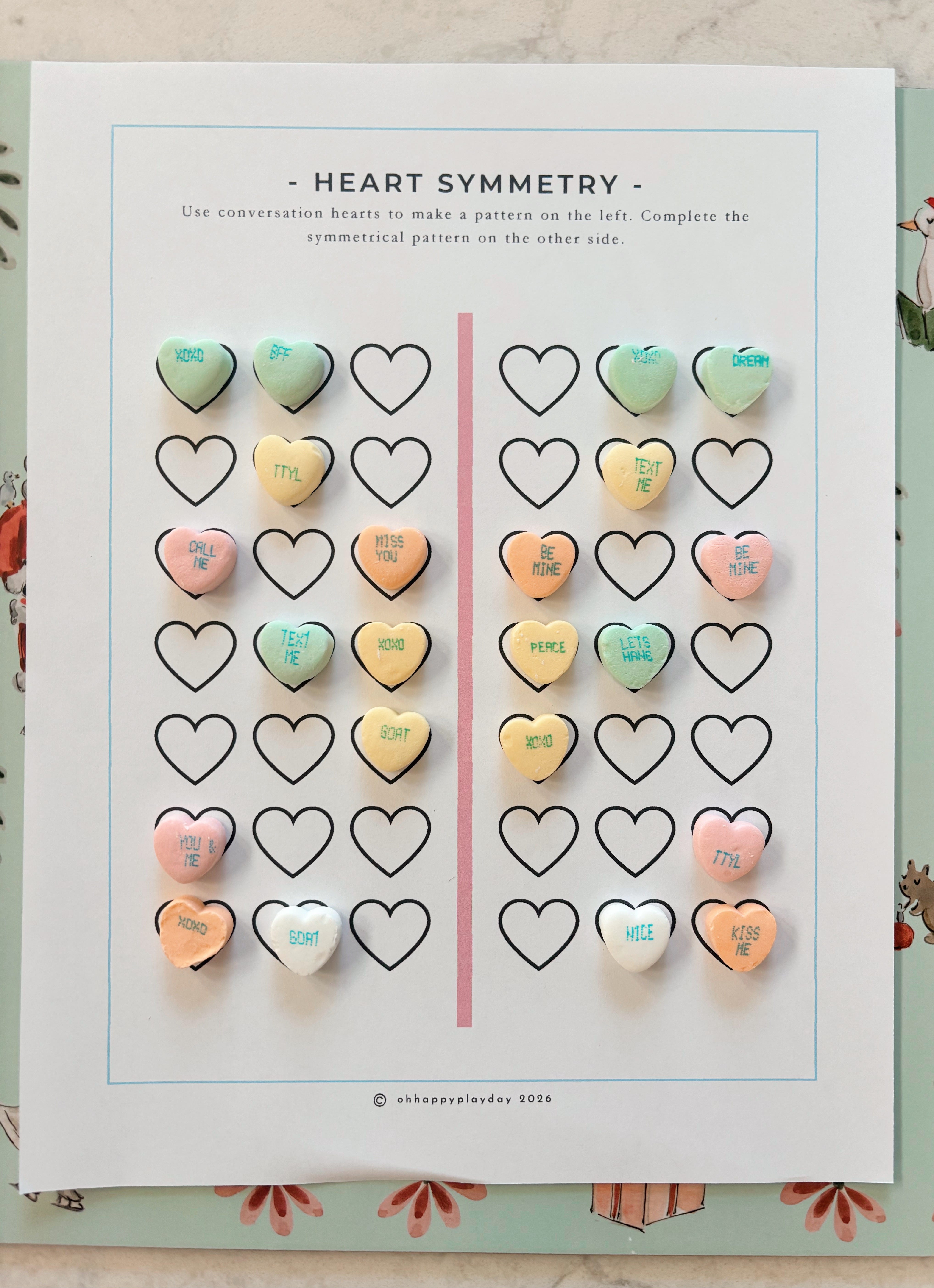
Arrange a simple pattern using conversation hearts on one side of the paper, then encourage your child to recreate the pattern on the opposite side to make it symmetrical. As kids carefully place each heart to mirror the design, they’re strengthening pattern recognition, visual discrimination, and spatial awareness.
11. Roll a Heart


Roll the die and identify its assigned color. Place the matching colored heart onto the board, then take turns continuing to play. The first player to cover all of their hearts wins the round.
12. Heart Count
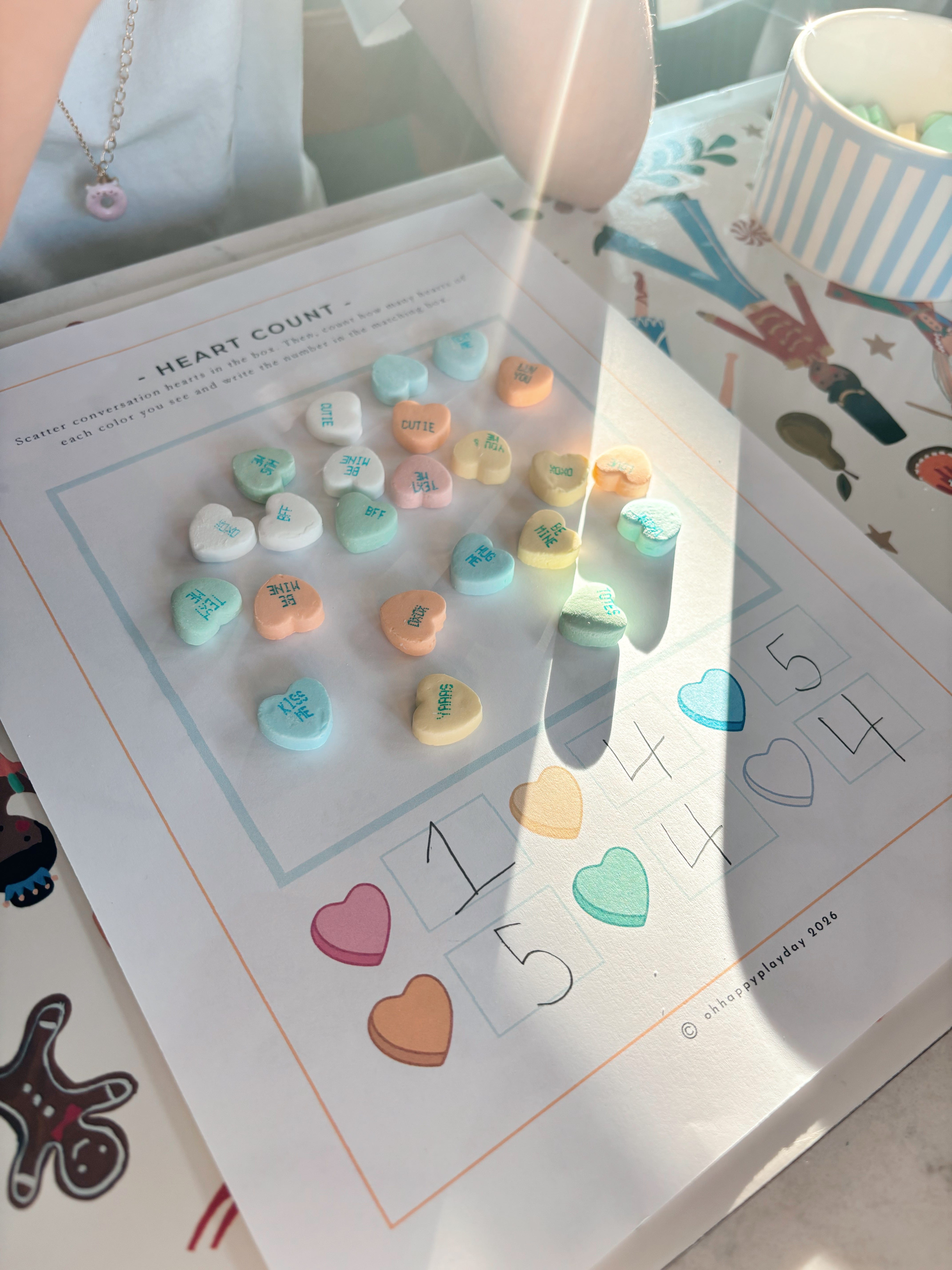
Scatter the conversation hearts inside the square. Count how many of each color there are, then write the total next to the matching colored heart.
13. Fill the Hearts
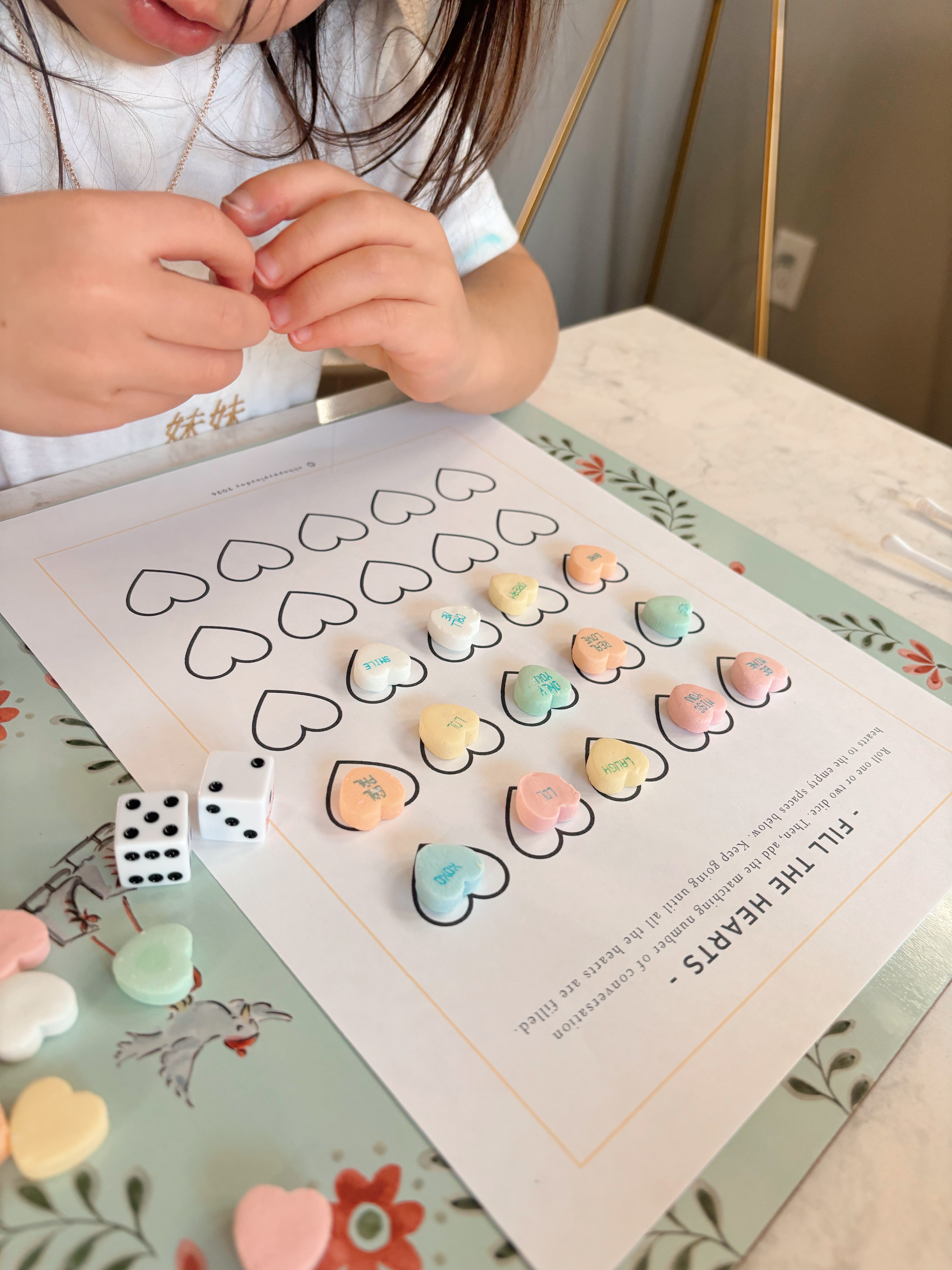
Roll one or two dice, then place the matching number or the sum of hearts onto the page. Continue playing until all of the hearts are filled. This game reinforces subitization, one-to-one correspondence, and fine motor skills. When using two dice, children also practice simple addition and mental math!
14. Transfer the Hearts

This last one was both of their favorites and so, so simple! Set out a pile of conversation hearts and transfer them from the pile to a heart of the same color on the page. Younger toddlers working on color recognition can use their fingers to place the hearts onto the page whereas older children can use tools like tweezers, chopsticks, or even straws to transfer their hearts.



For a copy of this printable pack, you can find it at ohhappyplayday.com or on Etsy.